
Destination vs Experience: Which Travel Planning Style Fits You?
Many people struggle with travel planning not because they’re bad at it — but because they start in the wrong place.
There are two main travel planning styles, and most travel advice only works for one of them.
Understanding which type of traveller you are can make planning faster, clearer, and far less stressful.

The Two Main Travel Planning Styles
Most trips are planned in one of two ways:
Destination-first travel planning
Experience-first travel planning
Both approaches are valid. Problems happen when advice meant for one is applied to the other.
Destination-First Travel Planning: Starting With the Place
Destination-first travellers begin with a location already chosen.
Common examples:
“I’ve always wanted to visit Japan.”
“We’re going to Italy this summer.”
“Flights to Lisbon are cheap. Let's go!”
The destination is fixed. The challenge is deciding what to do once you’re there.
Common Problems With Destination-First Planning
After choosing a destination, planning often turns into:
long “things to do” lists
pressure to see everything
overpacked itineraries
This leads to busy trips that feel more exhausting than enjoyable.

What Destination-First Travellers Actually Need
They don’t need more attractions. They need:
help prioritising experiences
realistic daily planning
ideas matched to their pace, energy, and interests
The destination isn’t the issue, the structure is.
How Destination-First Travellers Can Plan Better Trips
Once the destination is chosen, the goal isn’t to do more, it’s to decide what actually fits. Instead of starting with attraction lists, start with structure.
1. Decide What Kind of Days You Want
Before choosing activities, define the shape of your days:
slow mornings or early starts?
one main activity or several?
structured plans or open time?
This prevents overpacking your itinerary before you know how much you want to do.
2. Choose Experiences, Not Checklists

Rather than collecting individual attractions, group experiences by type:
walking neighbourhoods
food-focused days
nature breaks
cultural highlights
This makes it easier to prioritise without feeling like you’re missing out. If you’re someone who doesn’t get motivated by sightseeing, we’ve written a separate piece about that here.
3. Plan in Blocks, Not Minutes
Planning every hour creates fragile itineraries.
A more realistic approach:
one anchor activity per day
one optional idea
space for rest or spontaneity
This keeps days flexible while still feeling intentional.
4. Match Plans to Energy, Not Ambition
Many itineraries fail because they’re based on ideal energy levels.
Be honest about:
how much walking you enjoy
how early you like to start
how many “big” days you can handle in a row
Trips feel better when plans match how you actually travel.
5. Let Go of “Seeing Everything”
You don’t need to experience an entire destination in one trip.
Good travel planning is about:
choosing what matters most this time
leaving space to enjoy it properly
Depth almost always beats coverage.
Destination-first planning works best when you stop asking what’s possible and start asking what fits.
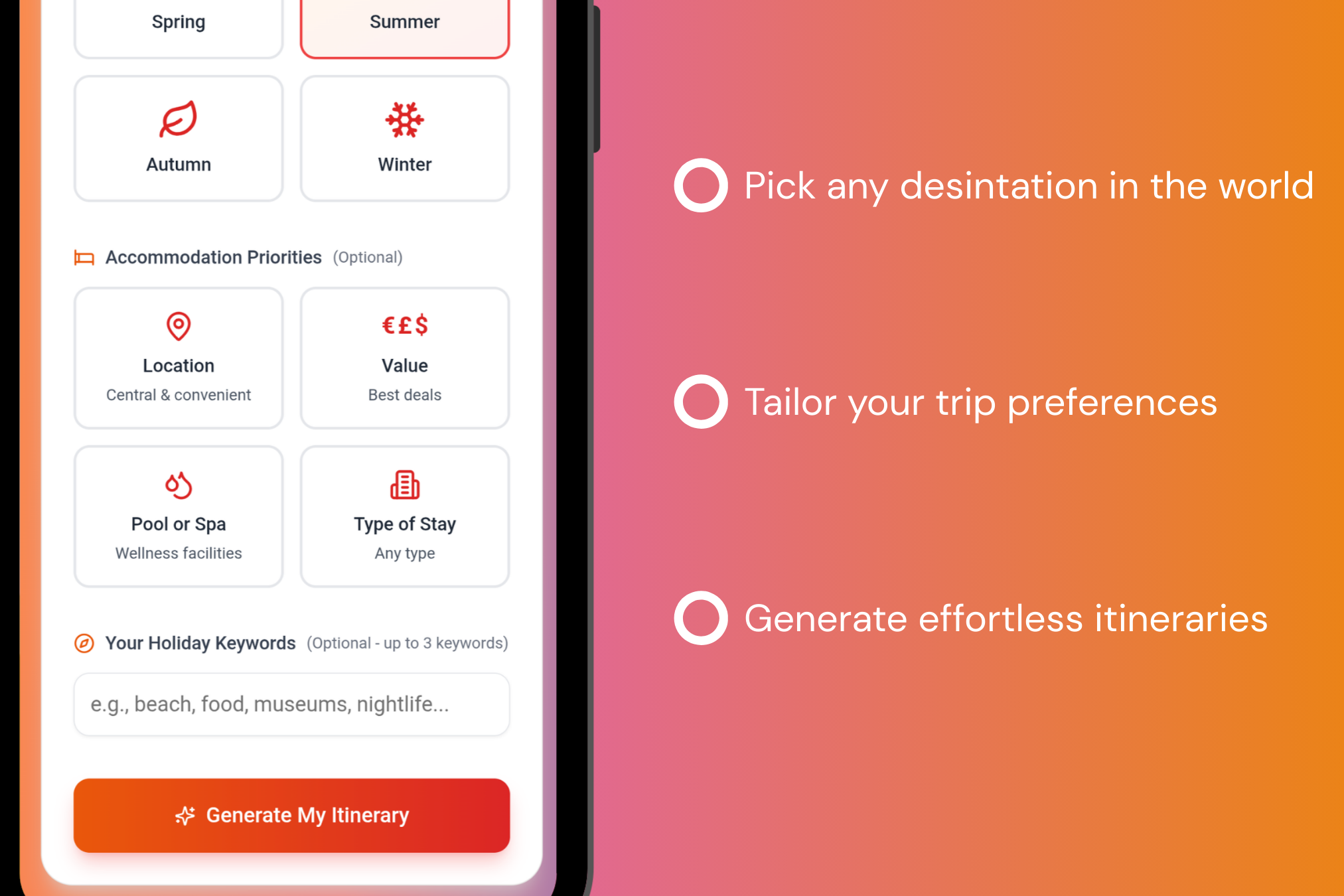
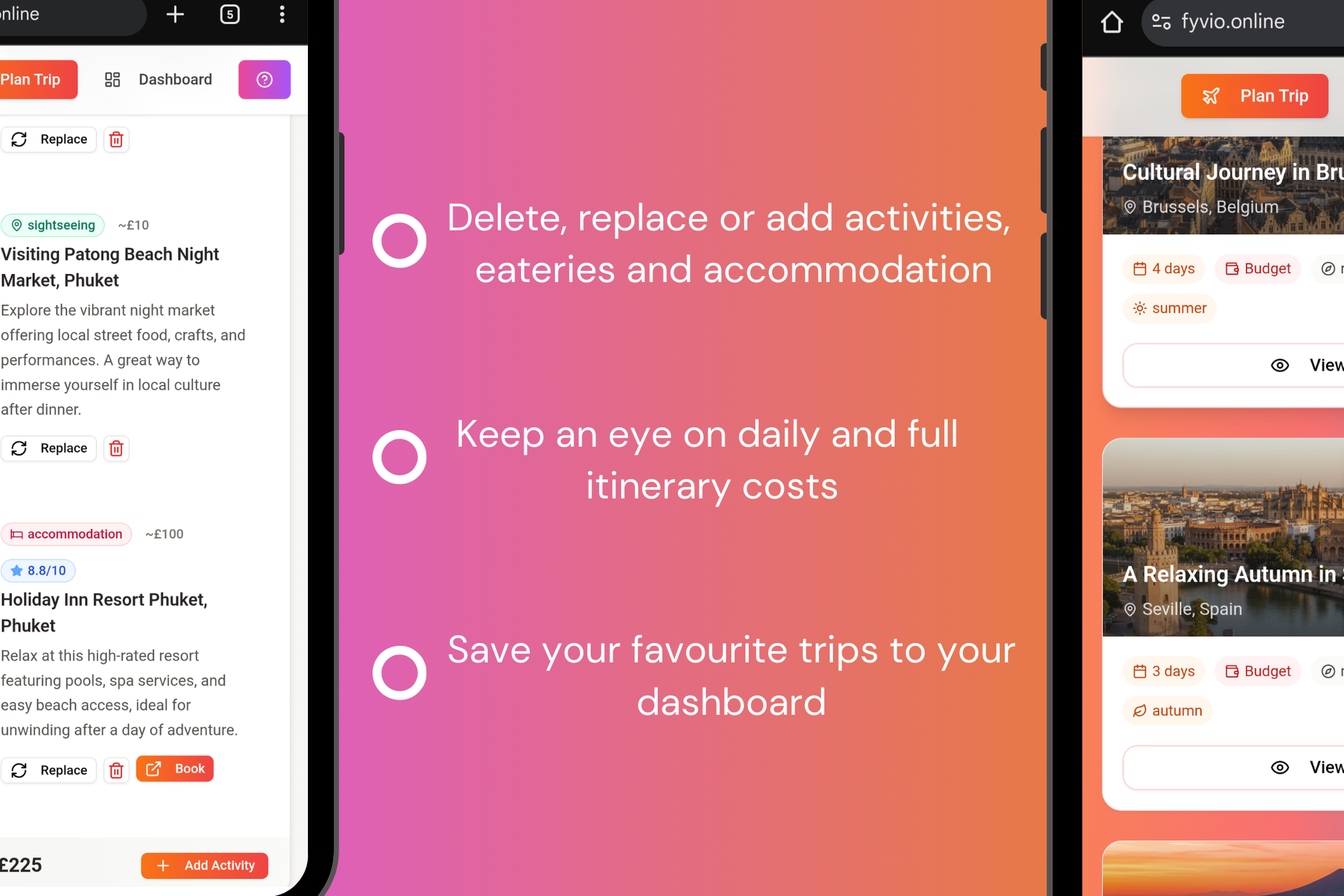
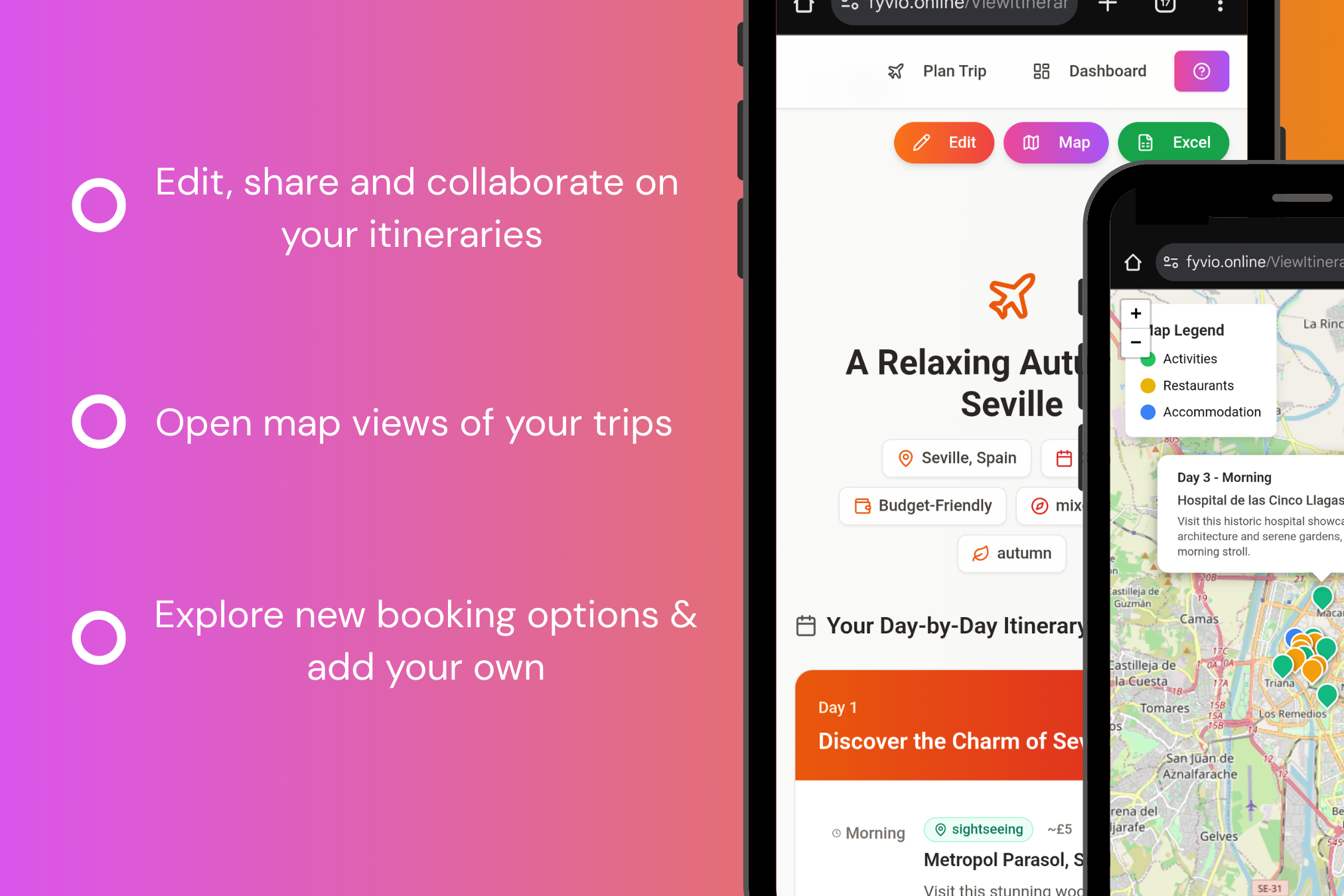
Your dream trip to anywhere with the Fyvio web app
Experience-First Travel Planning: Starting With the Feeling
Examples:
wanting to slow down
craving long walks and cafés
needing rest or mental space
wanting to avoid sightseeing altogether
The experience is clear. The destination is not.
Common Problems With Experience-First Planning
Most travel planning content assumes you already know where you’re going.
Without a destination:
every place looks appealing
decision-making becomes overwhelming
planning feels vague and endless
What Experience-First Travellers Actually Need
They don’t need endless destination lists.
They need:
destinations filtered by mood and pace
places that support specific types of days
fewer, better-matched options
For experience-first travellers, choosing where is the hardest step.

How Experience-First Travellers Can Choose Where to Go
When you know how you want a trip to feel, choosing where to go can still feel surprisingly difficult. That’s because feelings alone don’t narrow options enough. You need practical filters that translate experience into decisions.
1. Start With Season and Weather
Weather quietly shapes almost every travel experience.
Before looking at destinations, decide:
warm or cool?
predictable or changeable?
outdoor-friendly or cosy-indoor?
This immediately removes places that won’t support the kind of days you want, no matter how appealing they look online.
2. Set a Comfortable Daily Budget
Experience-first travel often fails when the place doesn’t match the budget.
Instead of asking “Is this city cheap or expensive?”, ask:
Can I comfortably eat, move, and exist here without constant calculation?
Does my budget allow for spontaneity?
Destinations that fit your budget create calmer, more enjoyable days.
3. Decide How Much Energy You Want to Spend Moving
Some places reward exploration. Others reward staying put.
Ask:
Do I want to walk everywhere?
Am I happy relying on public transport?
Do I want to settle into one area rather than move around?
This filter matters more than attractions — and instantly rules out mismatched destinations.
4. Think in Terms of Mood & Pace
Instead of “What do I want to see?”, ask:
What does a good day look like?
Where will I spend most of my time?
How much structure feels right?
Cities and regions have different natural pace and mood. Matching these dynamics is part of what makes a place feel “right” for you.
5. Use Constraints to Create a Shortlist
Once you’ve applied:
season
budget
energy
mood & pace
You should be left with a small, manageable list. At that point, choosing becomes intuitive rather than overwhelming. Experience-first planning works when feelings are grounded in reality.
Why Travel Planning Can Feel Overwhelming
Most travel advice assumes:
you know the destination
you want to sightsee
you want to maximise your time
That advice works for destination-first travellers, and often fails everyone else. When experience-first travellers follow destination-led advice, planning feels stressful. When destination-first travellers follow vague inspiration, plans feel ungrounded. The frustration comes from mismatched advice, not personal failure.
How to Identify Your Travel Planning Style
Ask yourself one question:
What do you know first when planning a trip?
If you know the destination → you’re destination-first
If you know how you want to feel → you’re experience-first
Many travellers sit somewhere between the two. But identifying your starting point simplifies every decision that follows.
How Starting in the Right Place Improves Travel Planning
Good travel planning isn’t about doing more research. It’s about asking the right question.
Destination-first planning improves when you focus on shaping days instead of collecting attractions.
Experience-first planning improves when you filter destinations instead of browsing endlessly.
Both approaches lead to better trips when used intentionally.

A Better Way to Plan Your Next Trip
Some travellers know where they want to go and need help deciding what to do. Others know what kind of days they want and need help deciding where to go. Recognising these two travel planning styles removes confusion and reduces planning stress. Once you start in the right place, everything else gets easier.
If travel planning often feels harder than it should, it’s usually a starting-point problem and not a lack of inspiration or effort.
