
Travel Planning Works Better When You Think in Constraints

Most travel planning advice treats constraints as problems to overcome.
Limited time.
Bad weather.
Low energy.
No car.
A fixed budget.
But in reality, the best trips aren’t the ones that ignore constraints.
They’re the ones designed around them.
Why Constraints Improve Travel Planning
Constraints aren’t necessarily limitations, they can simply be filters.
When you plan a trip without acknowledging constraints, every option feels possible. That sounds freeing, but it usually leads to decision paralysis, overplanning, and itineraries that fall apart.
Constraints simplify decisions.

They turn vague questions like:
“Where should I go?”
into practical ones like:
“Where is good for a three-day trip?”
“Where works well in November?”
“Where can I travel without driving?”
Those are easier questions to answer, and lead to better travel plans.
Common Travel Constraints You Should Plan Around
Most travellers have at least one constraint shaping their trip, whether they name it or not. Let’s take a look at some of the big ones!
Time Constraints
Short trips need different planning than long ones. Trying to fit too much into limited time creates stress instead of enjoyment. Be realistic, and factor in time to simply exist in the place you want to be.
Seasonal Constraints
Weather, daylight, and how locals go about their lives varies by month. Ignoring seasonality is one of the most common travel planning mistakes, as it has a huge impact on what you can and can’t do.
Energy Levels
Not every trip is designed for early mornings and packed schedules. Planning around realistic energy levels prevents burnout.
Mobility and Transport
Whether you don’t want to drive, prefer walking, or have mobility considerations, transport constraints determine what actually works day to day.
Flexibility
Some trips benefit from spontaneity. Others require structure. Knowing which type of trip you’re planning makes decisions clearer.
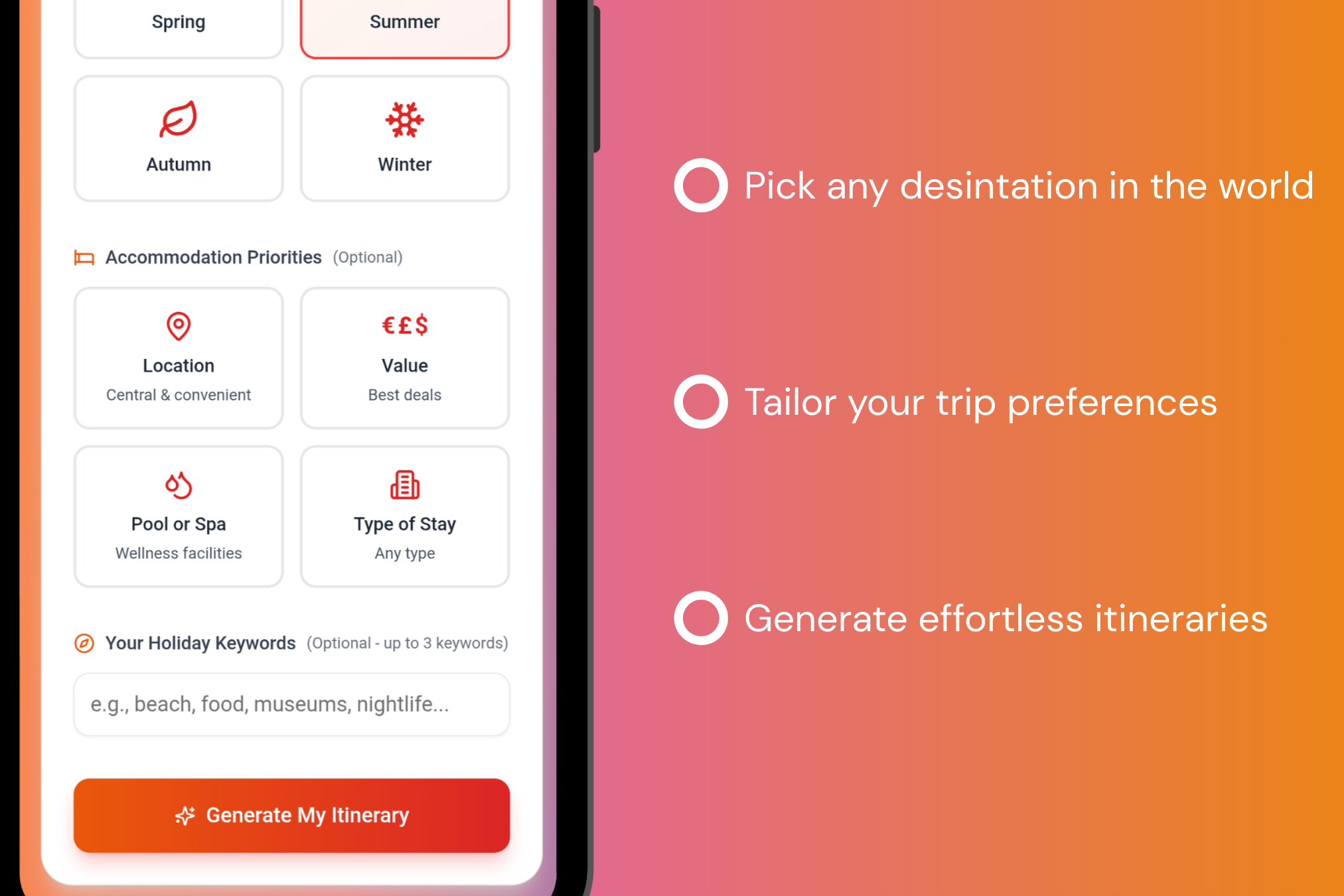
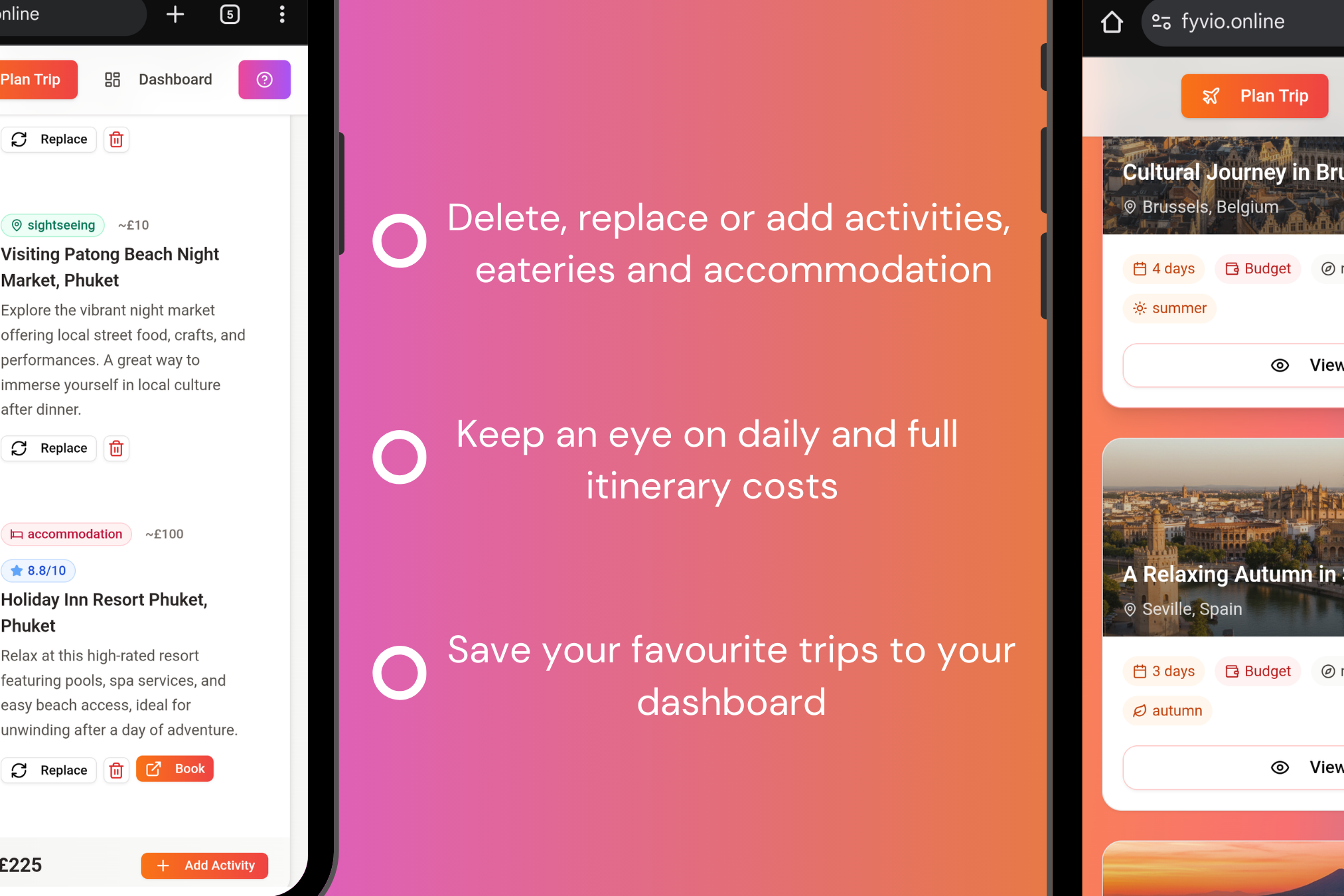
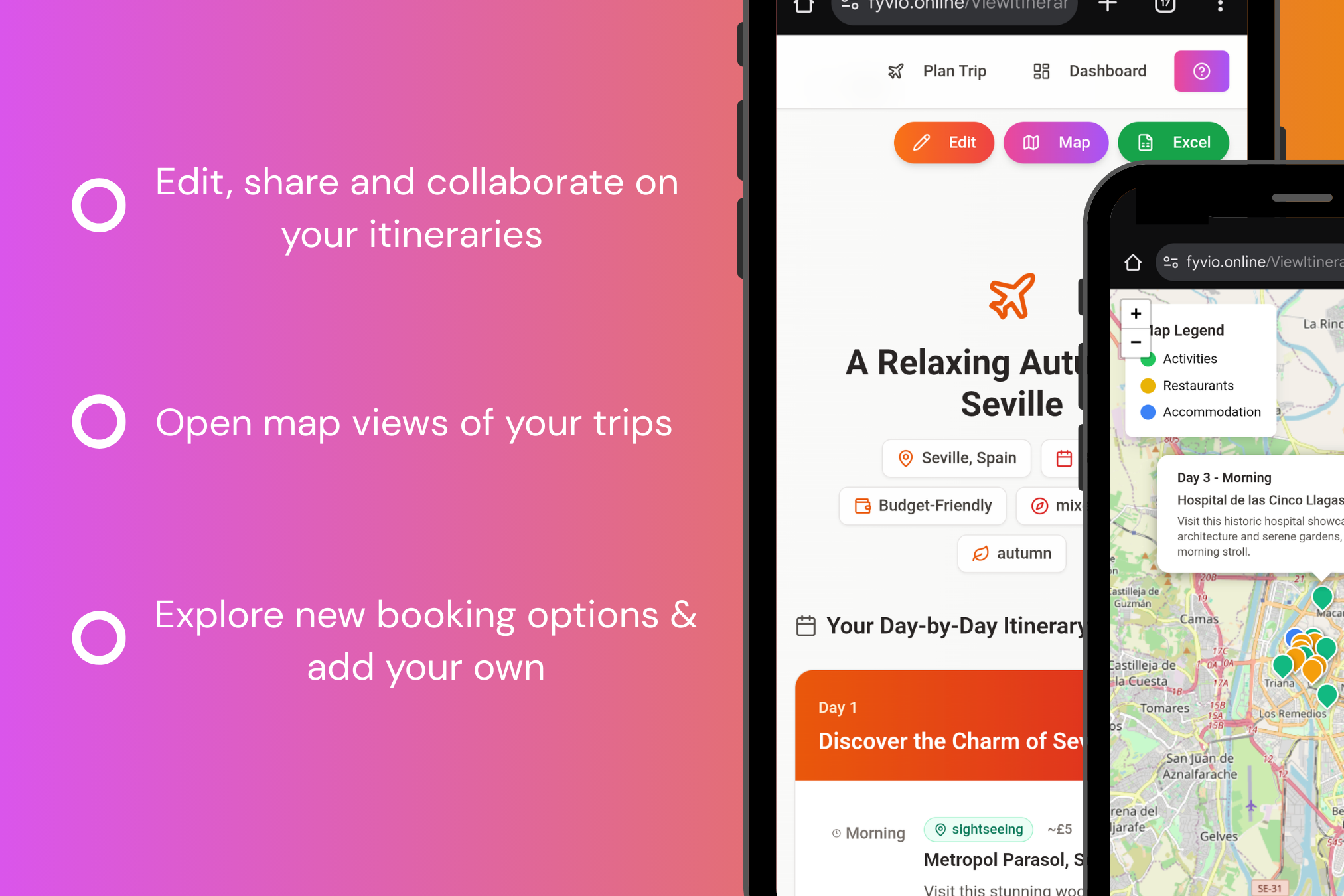
Your dream trip to anywhere with the Fyvio web app
Why Ignoring Constraints Leads to Fragile Itineraries

A fragile itinerary only works if everything goes perfectly.
It assumes:
ideal weather
perfect timing
unlimited energy
no delays or disruptions
When one thing changes, the whole plan breaks.
Constraint-led travel planning creates more resilient trips. With fewer, stronger options, it’s easier to adapt when plans shift.
Constraint-Led Planning Works for Every Type of Traveller
This approach works whether you start with a destination or an experience.
If you know where you want to go, constraints help you:
decide what to prioritise
avoid overloading your schedule
turn a destination into a realistic trip
If you know what you want from a trip, constraints help you:
narrow down destinations that actually fit
avoid mismatches between expectations and reality
make faster, more confident decisions
Either way, constraints act as your guardrails rather than being restrictive.
How to Plan a Trip Using Constraints
Good travel planning doesn’t ask: “What could we possibly do?”

It asks: “What works best given our time, energy, and limits?”
This mindset shift reduces planning stress and leads to calmer, more coherent trips.
Why Constraint-Based Travel Planning Feels Better
When you plan around constraints, you stop fighting reality. You choose destinations and daily plans that fit your life, and not an idealised version of travel. And that’s usually when trips start to feel genuinely good.
Good trips are designed around constraints, not despite them. We’re building a planning tool that starts there, whether you know what you want to do (but not where) or know where you want to go (but not necessarily what you want from the trip). Happy planning!
